
When Sobers Invented CricViz
On Sir Garfield Sobers’ 1967 novel about computers, spies and cricket analytics
Since the passing of Sir Garfield Sobers, I’ve seen a lot written about how he’s the greatest cricketer ever. A brilliant batter, an insanely versatile bowler, a hitter of sixes, a scorer of triple centuries, a holder of the highest Test score, a seam bowler, a finger spinner, a wrist spinner, a taker of catches, blah, blah, blah. Yes, we get it. An all-rounder much like Shane Watson, but somehow even better. Understood.
But what disappoints me is the lack of coverage of Sobers’ literary contributions to the sport.
Namely, his 1967 novel, Bonaventure and the Flashing Blade, a ‘novel about cricket’ that, despite its introduction that proclaims that it is merely ‘a fiction adventure story created for interest and entertainment and not a biography nor a prophecy of how cricket of the future might be played’, still manages to presage the CricViz-style power of data analysis on the game (this is not a joke).
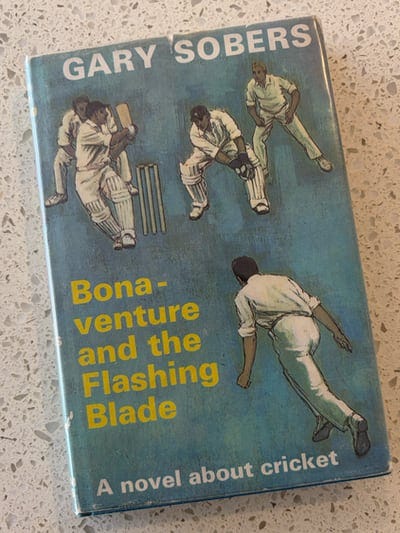
The premise of the story is a simple one: the magnificently named Clyde St Joseph Bonaventure, a young friend of Sobers, is a genius in the new-fangled world of computers. Alas, he has shamefully little interest in cricket. On the plus side, however, the mysterious and wealthy Star Computer Company wants to train Clyde in ‘secret processes’ at their ‘Midlands research headquarters’. A grand future awaits this young whiz!
Well, you wouldn’t believe it, but it turns out that Star Computers also sponsors cricket, like some kind of Indian cement company, so Clyde swiftly whips up an algorithm that cracks the entire game. Soon, he’s playing matches, using the hacks his ‘programme’ (sic) has uncovered to effortlessly score double centuries and take shitloads of wickets. But having proved the power of computers via his cricketing prowess, he is now suddenly in danger from spies working for ‘foreign powers’. Because, this is 1967, remember?
Clyde effortlessly escapes from the intended kidnapping (a detail helpfully revealed in the blurb, presumably so we don’t have to worry too much for him), setting up a thrilling climax in which Clyde’s Bonaventurers take on an All-Comers Eleven captained by Sobers himself!
Great stuff! Something for the IPL to consider, that’s for sure.
Of course, Sobers being Sobers, it’s not enough for him to simply master the art of plotting an action adventure novel. He must also master the style of writing.
Too many modern writers get bogged down in the decision of first person perspective or third person perspective when penning their fiction. (Yes, you get bogged down in second person perspective. I know.)
But Sobers, the masterful all-rounder, is bound by no such limitations. Sobers narrates the first chapter himself in first person, then disappears to Australia, allowing the story to play out in third person from then on. But suddenly, with a dozen pages to go, the great man makes his return, mid-chapter, first person-ing it up once more as he recounts the final cricket match.
It’s a wild ride. And while I can’t exactly say I recommend tracking down an actual copy of the book, just knowing it’s out there makes me happy. (And, again, to be musing about the potential impact of computer analysis on cricket in 1967 is utterly mad.)
And, frankly, until Jacques Kallis writes a sequel, the ranking of cricket’s greatest ever all-rounder is not even worth discussing.
